News

Engineering a Safer Future

Simple attention to safety engineering detail has resulted in extraordinary cuts in road deaths and serious injuries, according to the latest tracking survey by the Road Safety Foundation. Fatal and serious injury crashes on just 10 stretches of treated road fell by nearly two thirds from 541 to 209 (2001-2005 and 2006-2010) - a boost to the economy worth £35m every year.

The Prime Minister has set this autumn as the deadline for a radical review of the finance and ownership of the major road network. The Foundation has analysed the safety of Britain's entire motorway and A road network and is calling on government to make safety central to any reform. It argues in the report that minimum safety levels should be set which make sense to the public, to investors and to new operators of Britain's major road infrastructure. 

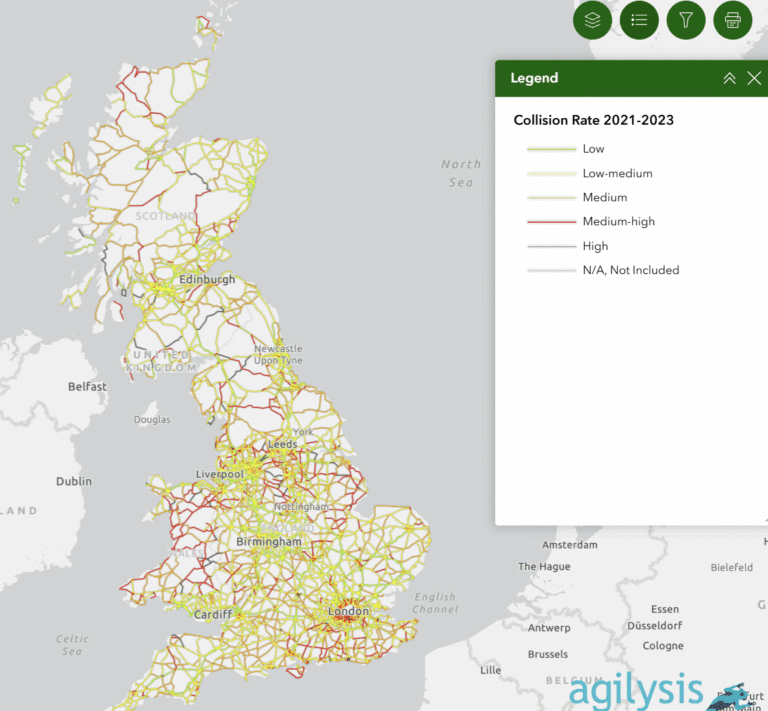
For the first time, this year's report has named Britain's busy higher-risk roads, with the A21 (A229 to Hastings) topping the league, and two further roads in the south-east in the list. The combination of having risks well above average with many road users exposed to these risks makes them prime candidates for action with potential to save life and economic cost.

Typically, the "highest risk" and "persistently high risk" roads - narrow, twisting, hilly - are in the rural areas of the north. Although apparently clear candidates for priority action, their lower traffic flows may not justify the spend on improvements. 

The 10 busy higher-risk roads have higher than average traffic flows, a high crash density and an above-average risk rating. 

Commenting on this new listing, Dr Joanne Marden, director of the Road Safety Foundation says: "Even a modest ambition to improve these sections of road - so they simply get an 'average' risk rating and became six times more risky than motorways -  would save many lives and cost savings to the economy of £20m annually.

"The planned reforms in road financing means a new focus on measuring safety performance and the high returns quickly available from safety engineering. Where there is clear evidence of higher risk and heavy traffic flows, the economic case for intervention is compelling. With 2% of GDP lost in road crashes, as well as lives, we can get quick, guaranteed returns by raising safety levels."

For the first time, the study is sponsored by Ageas UK, whose Chief Executive, Barry Smith says: "You cannot manage what you do not measure. As taxpayers, we spend around £10bn each year on roads. Insurers pay out £10bn more to meet the cost of crash claims. We support the Foundation's annual publication as the key measure of the safety of Britain's roads, demonstrating both the need for action on high risk roads and the positive results this can have."

Britain's Most Improved Roads

This year's most improved road is a rural 20km (13 mile) single carriageway section of the A605 in Cambridgeshire, from just outside Peterborough, through Whittlesey and out to the busy junction of the A141. Speeds through villages are 30 or 40mph, with the rest of the route at 60mph.

Over the two survey periods, fatal and serious crashes fell by 74% from 34 to 9, and its risk rating improved from medium in 2001-2005 to low-medium in 2006-2010. In the first survey period (2001-2005) crashes at junctions, involving vulnerable road users and vehicles running off the road were prominent, each accounting for 30% of the total. Between 2006-2010 these proportions fell to 11% for each category.

Collisions were concentrated near the lower-speed limit areas, so visual clues of built up areas - such as village gateways and "dragon's teeth" road markings - now warn drivers of hazards ahead, and speed cameras, combined with this traffic calming, contributed to the improvements.

The most significant improvement along the whole route is a 9km section between Whittlesey and Coates, with a 74% drop in the number of fatal and serious crashes over time, from 23 to 6, represents a saving of £1.4m per year.

The overall two-thirds drop in fatal and serious crashes on the top ten most improved roads from 541 to 209 represents a saving of £35million a year - or £120,000 per kilometre. The use of speed enforcement with fixed and mobile cameras is on all but two of the most improved roads. Changes to the layout and traffic management at junctions are common features, and other measures include new traffic signals to control traffic flow; restricting turning movements onto roads with high traffic levels or poor visibility; widening entry and exit lanes with changes to the lining and signing; advanced warning signs; and installing high friction and coloured surfacing.

"These are practical, relatively inexpensive solutions which will pay back the costs of investment in a matter of weeks - with high rates of return in the first year alone - and go on saving lives and saving money for the nation for many years to come. Much of this remedial work can be done as part of routine maintenance," says Dr Marden.

"Other leading countries are investing to upgrade safety on major roads. Dutch Ministers have announced a minimum 3-star safety rating for their national network by 2020 following an assessment of costs, benefits and practicality. The British public should not be driving 5-star cars on 1- and 2-star roads. The government must make minimum safety levels the centrepiece of any reform." 

Follow any comments here with the RSS feed for this post. You can post a comment.

8 comments for “Engineering a Safer Future”

  1. Posted Wednesday, January 23, 2013 at 3:29:39 AM

    Duplicate Rolex designer watches are generally therefore fantastic in character to the genuine one which the distinction seriously isn't recognizable by simply virtually any regular individual.

  2. Posted Tuesday, February 19, 2013 at 7:22:08 AM

    and also time frame using a few moments. A fanatical switch swithces concerning 12H and also 24H models. I'm content to survey this W-800H can be lightweight and also is effective seriously properly as being a swimmer's enjoy! I adore this.

  3. Posted Thursday, March 21, 2013 at 7:50:30 AM


    That is why Rolex website delivers compliant e-I77 Rolex Daytona duplicate watches around the world cost successfully.

  4. Posted Monday, April 22, 2013 at 8:47:28 AM

    thank for your sharing,i like it very much!

  5. Posted Friday, May 03, 2013 at 2:34:52 AM

    we have all well loved as well as latest released Onlines in our database.

  6. Posted Wednesday, May 08, 2013 at 9:01:12 AM

    thank for your sharing,i like it very much!

  7. Posted Friday, May 31, 2013 at 10:30:34 AM

    Cheap Dior Sunglasses is the art of combining aesthetic design with sophisticated manufacturing technology. Cheap Sunglasses Designer younger frame and design into the fashion sexy fluent lines, Which is a pleasant one.

  8. Posted Friday, May 31, 2013 at 10:31:46 AM

    Nike Free Run 2 Mens is a sort of technology created by Tobie Hatfield. Nike Free 4.0 V2 running shoes FREE series of proud of, "barefoot feel" is exclusively reserved, the unique outsole constructed to restore the a pure gait sense, let your feet get reborn like a sense of freedom.

Post a comment